 About the book…
Sealed is a gripping modern fable on motherhood, a terrifying portrait of ordinary people under threat from their own bodies
Heavily pregnant Alice and her partner Pete are done with the city. Alice is haunted by rumors of a skin-sealing epidemic starting to infect the urban population. She hopes their new remote mountain house will offer safety, a place to forget the nightmares and start their family. But the mountains and their people hold a different kind of danger. With their relationship under intolerable pressure, violence erupts and Alice is faced with the unthinkable as she fights to protect her unborn child.
Timely and suspenseful, ‘Sealed’ is a gripping modern fable on motherhood, a terrifying portrait of ordinary people under threat from their own bodies and from the world around them.
Sealed has been previously published by Titan and Dead Ink books, and is available in e-book and paperback editions.
”Think of it as a skin cancer,’ a tv doctor pronounced breezily: stay vigilant and seek advice from a health-care provider if you notice anything unusual”
This is all well and good if a) you can afford a health care provider and b) are able to notice any symptoms when barely anyone knows just what Cutis Sigillatis is.
A novel of body horror, paranoia and environmental destruction, it is unlike any other book which I have read before.
Searing, urgent, and unputtdowndable, this is the tale of a young woman, Alice, and her partner Pete just before their first child is born. Both have fallen into this relationship as teens who lived next door to each other in a public housing complex, seperated and then reunited by life as both their mothers remained living there.
At the start of the story, Alice and Pete have moved from the city to Lakoomba, a small outskirts town away from the issues which Alice has been having, that have led her to take early Maternity leave.
”So here we are, in the middle o nowhere. In the foothills of the mountains, where the eucalypt oil fills the sky and turns the earth blue. Where animals scream in the night and the neighbours threaten to kill us. Here we three are, waiting to be a family.”
All through the novel you are never quite sure who or what to believe, Alice’s paranoia about oncoming death from multiple sources is ironically contagious, As a Housing Officer , she has been at the site of displacement camps, her suspicion rising as she is schmoozed by housing contractors about these places which were supposed to be set up in the event of an oncoming crisis, not before one begins.
The poor and the dispossessed as well as the indigneous Aborigines are the ones who are most affected by the now regularly occurring environmental fires, the drifting smoke carrying toxins on the wind and affected breathing.
Lacking the means to move, or buy masks, and keep themselves safe, not only do they start overrunning the Dr surgeries but also the emergency services and social services, which in turn begins to crumble. This lead to accusations that these indigent people must therefore be the source of the cumulating disease which no one is actually acknowledging exists, cutis.
When asked , most people would respond to the question of ‘what is the body’s largest organ?’ with the heart, or maybe the digestive system.
Very few people are aware that th skin is in fact the largest human organ, responsible for protection against infection, homeostasis, hydration, structure and support of organs and so much more.
And it is this organ that cutis attacks, it seals you into your own body causing horrific deaths dependent on which openings are sealed up.
When Alice’s mother dies and she sees for herself the effect of cutis, and after viewing the remains of a tenant’s body in her job, she begins recording the symptoms for herself to track the disease that very few are admitting is even happening.
Lack of information drives Alice’s and our imagination wild-who is responsible for this? Where has it come from? And what effect will it have on Alice when she comes to give birth? And what will she deliver?
Alice’s internal monolgue explores the darker side of pregnancy, she sees herself filled and also invaded by this unknown presence, which is sealed into her . She sees bones and limbs and bits and pieces when she thinks of the ultrasound pictures, whilst Pete sees the baby he expects to see.
On closer inspection, the role of motherhood, belonging to and loving a child is at the root of Alice’s fear, her love is effectively sealed within her. She is so scared of being trapped within her skin , with her feelings and thoughts that this disease is literally her worst fear, come to life.
Moving away from the temptation to use public information and break the security rules of her employment in a public service, Alice thinks she is escaping the toxins and poisons of the city and its polluted food. But when she and Pete arrive in the town they plan to raise their child in, what was an escape is actually another step closer to the flame.
Explicit but also deliberately vague to leave the reader spaces to fill in with their own ideas about just what is going on, this is such a timely novel which explores the human condition in the context of the frailty of the human body. The only thing which can save us is the sheer resilience that we have to keep going forward. And pray for the next generation that things will get better.
 About the author…
Naomi Booth is a fiction writer who lives in Yorkshire, in the north of England. Her work explores unsettling landscapes, strange compulsions, and aberrant bodies.
Her debut novel, Sealed, is a work of eco-fiction that has been described as ‘the perfect modern horror‘ (Helen Marshall) and ‘marvellous … though not for the faint-hearted‘ (The Guardian).
Sealed was shortlisted for the Not the Booker Award in 2018 and is published in the UK and the US.
Naomi’s first work of fiction, the novella ‘The Lost Art Of Sinking’, is set in the Yorkshire Pennines and tells the story of a girl who compulsively passes out. It won the Saboteur Award for Best Novella 2016.
Her most recent novel, ‘Exit Management’, moves between contemporary London and mid-20th century Budapest, and has been reviewed as a “timely and original dissection of class and desperation in Brexit Britain“.
You can find her short fiction in ‘Best British Short Stories 2019’, and in the Audible Original/Virago anthology ‘Hag’, where she retells the tale of the Yorkshire boggart. Her short story ‘Cluster‘ was long-listed for the Sunday Times Short Story Award and she was named by the Guardian as a ‘Fresh Voice: Fifty Writers You Should Read Now‘ in 2018.
Links-https://naomibooth.com/
Twitter @naomibooth @TitanBooks
Author

bridgeman.lenny@gmail.com
Related posts

#CoverReveal ‘The House On Blood Street’ by Josh Hanson
HUGE thanks to Jamie-Lee at Black Crow Books for inviting me to be a part of an exciting cover reveal, for forthcoming...
Read out all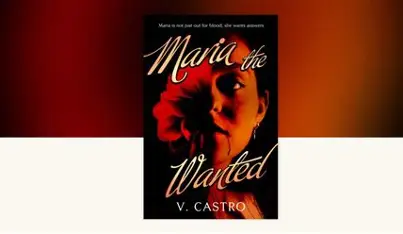
#BookReview ‘Maria The Wanted’ by V.Castro
About the book… Newly turned Mexican vampire, Maria, is not just out for blood, she wants answers. From the twice Bram Stoker-nominated...
Read out all
#CoverReveal ‘Crone’ by Keith Rosson #HorrorHypeTeam
Guys! If you don’t know the name Keith Rosson, or how he has become one of the movers and shakers in the...
Read out all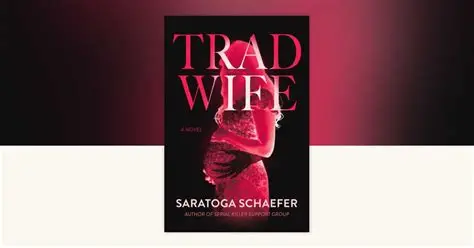
#BookReview ‘Trad Wife’ by Saratoga Schaefer
About the book …. Published by Transworld Publishers on February 19th , 2026, huge thanks to the publishers for approving my request...
Read out all
#BookReview ‘The Autumn Springs retirement Home Massacre’ by Philip Fracassi
About the book… Rose loves her peaceful life at the Autumn Springs Retirement Home. A woman in her late seventies, she enjoys...

#BookPreviewReview ! ‘The Hive’ by Ronald Malfi
About the book… An epic, Lovecraftian horror novel in the vein of Black River Orchard and American Elsewhere about a small town...
Read out all