About the book…
 A special 40th anniversary edition of the classic, bestselling novel that novel that launched James Herbert’s career
It was only when the bones of the first devoured victims were discovered that the true nature and power of these swarming black creatures — with their razor sharp teeth and the taste for human blood — began to be realized by a panic-stricken city. For millions of years, man and rat had been natural enemies. But now for the first time — suddenly, shockingly, horribly — the balance of power had shifted…
With a foreword by Neil Gaiman and a swish new cover, ‘The Rats’ gets a new lease of life!
This was one of my gateway to horror novels, read in fevered moments snatched away in the school library whilst my contemporaries were hoovering up Sweet Valley High
The sharp teethed little monsters crept into my dreams through the pages of this book and its sequels ‘Lair’ and ‘Domain’ -from then on in I was hooked.
Bearing in mind that it has been the better half of 30 years since I have read this story, the first thing that struck me was the way it was so dated. The casual sexism-the principal character, Harris, a school teacher refers to 14 year old female pupils as ‘crumpet’-the epithets which pepper dialogue, the class divide so visibly exemplified in the higher levels of army using ‘old boy’ made for a very obvious disconnect to the books of today.
The mutated rats start out slowly and begin to grab hold of territory as they become bolder, starting out in the slums of the East End and gradually grabbing footholds into the most prosperous parts.
They say to write what you know, so it is not surprising that James Herbert began his career writing about the area he grew up in in London, and the rats were a constsant presence in his life. These mutated beasts are not just devouring the poor, the downtrodden and vulnerable-the first victims are homeless people, a baby, school children-they kill with just one bite.
I can’t remember where I read it, but the rats were meant to be an allegory of society which sees the working class as disposable fodder. The time it was written in was a time of rebellion, the rise of the anti capitalist, anti-monarchy punk movement and the fight for equality ushered in on the back of the Abortion Act and contraceptive pill being introduced. So it is not difficult to read about the blood and flesh of the poor being consumed as analogous with the way that the upper classes suffocate the lower ones.
One of the first victims is a homeless woman, originally from Ireland whose decline and degredation stems from her conflict between a strict Catholic upbringing vesrus the enjoyment of the flesh. Her search for an orgasmic experience without catching pregnant-or worse-seems laughable, but when you dissect her passages and death, and contextualise it, this was written at a time when women were still seen as the property of men, the female orgasm was thought to be rarer than unicorns, and choice in sexual partner was dictated by the males in your life. Enjoyment of sex was not seen as the province of women so whilst this seems ludicrous at first glance, thematically it makes sense.
Herbert’s rage against the maintenance of luxury by the oppression of the poor is often verbalised by Harris raging against the place he as brought up in, his external and internal dialogue at odds with things people would, in reality, say out loud.
”How many more people would they kill before they were put down? And where had they come from? What made them so much more intelligent than their smaller counterparts? Well, why should he worry?It was the problem of the bloody authorities.But what disgusted him more?The vermin themselves-or the fact that it could only happen in East London?Not Hampstead or Kensington but Poplar. Was it the old prejudice against the middle and upper classes,the councils that took the working class from their slums and put them into tall, remote concrete towers,telling them they’d never been better off,but never realising that forty homes in a block of flats became forty sperate cells for people,communication between them confined to conversations in the lift,was it this that really angered him?”
Harris becomes the prototype for the average leading man in Herbert’s latter novels, the one who straddles the plot and finds the answers, the accidental hero. His girlfriend, Judy, is just an adjunct for him to occasionally have sex with ( and oh lord does this grate, he has this weird obsession with her pubic hair that made me squirm…)the female characters exist as conduits-the boys and male teachers for example, focus on preventing the girls from going hysterical when the rats attack the local school.
Aside from the dated use of language and stereotypes, there is joy to be found in reading the very start of a writer’s journey, especially of you know how far they have come. Having grown up with James Herbert’s books on my shelves and seeing how far there is between books like this and ‘The Ghosts Of Sleath’ or ‘Fluke’, it is interesting to go back to the start and see the fledgling writer begin to come out of his shell and start his journey.
There are some great set pieces-the rats invasion of an underground train live, an attack on a zoo, a hideous failed experiment to poison the rats and a satisfying third act which feels appropriate and not tagged on. It’s a quick read, it’s only 197 pages long. But from here, a decades long horror career was launched and I think it is remembered with fondness, it is still in print and there is that immediate sense of recognition when you mention the title which makes you feel a part of something special.
Much imitated, very rarely equalled and missed, James Herbert, I salute you for this outrageous, gore filled and dramatic entry to the annals of horror fiction.
About the author…
 James Herbert was Britain’s number one bestselling writer (a position he held ever since publication of his first novel) and one of the world’s top writers of thriller/horror fiction.
He was one of our greatest popular novelists, whose books are sold in thirty-three other languages, including Russian and Chinese. Widely imitated and hugely influential, his 19 novels have sold more than 42 million copies worldwide.
As an author he produced some of the most powerful horror fiction of the past decade. With a skillful blend of horror and thriller fiction, he explored the shaded territories of evil, evoking a sense of brooding menace and rising tension. He relentlessly draws the reader through the story’s ultimate revelation – one that will stay to chill the mind long after the book has been laid aside. His bestsellers, ‘The Magic Cottage’, ‘Haunted’, ‘Sepulchre’, and ‘Creed’, enhanced his reputation as a writer of depth and originality. His novels ‘The Fog’, ‘The Dark’, and ‘The Survivior’ have been hailed as classics of the genre
4 comments
Leave a Reply
You must be logged in to post a comment.
Author

bridgeman.lenny@gmail.com
Related posts

#CoverReveal ‘The House On Blood Street’ by Josh Hanson
HUGE thanks to Jamie-Lee at Black Crow Books for inviting me to be a part of an exciting cover reveal, for forthcoming...
Read out all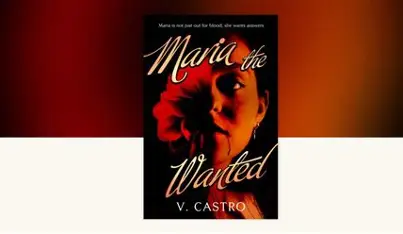
#BookReview ‘Maria The Wanted’ by V.Castro
About the book… Newly turned Mexican vampire, Maria, is not just out for blood, she wants answers. From the twice Bram Stoker-nominated...
Read out all
#CoverReveal ‘Crone’ by Keith Rosson #HorrorHypeTeam
Guys! If you don’t know the name Keith Rosson, or how he has become one of the movers and shakers in the...
Read out all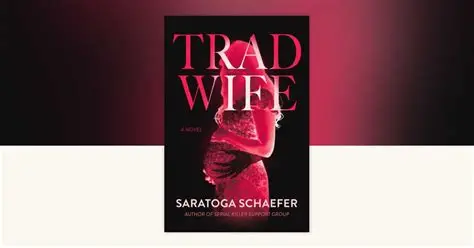
#BookReview ‘Trad Wife’ by Saratoga Schaefer
About the book …. Published by Transworld Publishers on February 19th , 2026, huge thanks to the publishers for approving my request...
Read out all
#BookReview ‘The Autumn Springs retirement Home Massacre’ by Philip Fracassi
About the book… Rose loves her peaceful life at the Autumn Springs Retirement Home. A woman in her late seventies, she enjoys...

#BookPreviewReview ! ‘The Hive’ by Ronald Malfi
About the book… An epic, Lovecraftian horror novel in the vein of Black River Orchard and American Elsewhere about a small town...
Read out all
Love this! Thank you for sharing. I too am a massage Herbert fan and his The Dark was my gateway book to the horror genre. I own every book he’s written, including the nonfiction and it will forever be close to my heart. 🖤
Oh that is so wonderful to hear Lisa! His passing genuinely left me bereft, his body of work is incredible
Big Herbert fan here too… I just bigged up the haunting feeling of Sepulchre over on World Geekly News for their ‘best ghosts’ feature: https://worldgeeklynews.com/films/twelve-great-ghosts-who-arent-jacob-marley/
I was inspired by Herbert’s excellent nasty streak in my debut Novel Complete Darkness too!
Oh wow! I will check it out thanks Matt!