The 87th Precinct series by Ed McBain, set in New York were the crime novels which I cut my teeth on as a kid.
And when I say kid, I mean kid, of roughly 9 years old-I was endlessly fascinated by the narrow selection of books that my parents owned, the cover of the classic ‘Sadie When  She Died’ was intriguing to say the least. My father owned 3 Ed McBain books which I read over and over until the characters of erstwhile Steve Carella, Meyer Meyer et al were ingrained into my subconscious. When I realised that I could borrow these books from the library, I worked my way through them, as well as the ‘Matthew Hope’ series and all that he wrote under his real name, Evan Hunter.
Imagine my joy then to see that the majority of the 87th Precinct have been recovered, released and are available on Kindle Unlimited?!
PURE JOY!
So starting with book 1, here is my readathon of these fabulous, gritty, noir novels which influenced so many of the writers currently working in the crime and police procedural genre today. This idea is absolutely not my own, researching the books I came across podcasts and blogs which have worked their way through the series in brilliant ways so I’ll say ‘Thanks!’ for the inspiration and posts, and link them at the foot of each of the series entries.
Enjoy!
My plan is to read the book, then listen to the accompanying podcast, read the Tipping My Fedora entry about the book in question and try to coalese my thoughts into something approaching logic.
About the book…
 ‘Cop Hater’ is the first in the 87th Precinct stories.
The heroes of the city’s streets are becoming the hunted. When Detective Reardon is found dead, motive is a big question mark. But when his partner becomes victim number two, it looks like open-and-shut grudge killings. That is, until a third detective is killed. Swift, silent and deadly, someone is picking off the 87th Precinct’s finest, one by one. The how of the killings is obvious: three .45 shots from the dark add up to three very dead detectives. The why and the who are the Precinct’s big headaches now. With one meagre clue, Detective Steve Carella begins his grim search for the killer, a search that takes him into the city’s underworld to a notorious brothel, to the apartment of a beautiful and dangerous widow, and finally to a .45 automatic aimed straight at his head ..
‘Cophater’ is spread across the end of July/beginning of August 1954, mid heatwave. Tensions are rife within, and without the 87th Precinct which at that time, numbered 16 detectives under the eye of Lieutant Byrnes. Until there were only 15…
As the police try to work out whodunnit, and why someone is gunning for detectives with a .45, there are glimpses into the personal lives of the to-be-central characters such as Steve Carella and Bert Kling.
”He had been a cop for twelve years now,and he had learned to stomach the sheer,overwhlming,physical impact of death-but he would never get used to the other thing about death,the reduction of pulsating life to a pile of bloody,fleshy rubbish.”
It is a taut, short, merciless and sometimes humorous police procedural where finding a cophater is like shooting fish in a barrel. Even one of the detectives themselves announces that being a ‘bull’ is not necessarily a profession for a smart fella.
”All you need to be a detective is a strong pair of legs and a stubborn streak.The legs take you around to all the various dumps you have to go to,and the stubborn streak keeps you from quitting.You follow each seperate trail mechanically and,if you’re lucky, one of the trails pays off.If you’re unlucky,it doesn’t.Period.”
The first time I read this book I was in my teens and working my way through the 87th stories in whatever order they happened to appear in the local library so it  was interesting seeing Steve introduced for the first time. Something I was concerned about, was the description of him in pretty much every novel as having ‘downward slanting eyes’ which give him an ‘Oriental appearance’. Oh boy.
I am unsure whether this was intentional as later in the book his appearance is used as the butt of a joke when a woman appears at the station saying she knows who killed the cops. She demands to speak to an American policeman after Steve offers to take her statement-he wryly assures her that he learnt the English language from the natives. However, I am pretty sure that every time he is introduced in any of the stories, he is referred to in this way, which I am not certain if I can say , unequivecably, that this is racist.Is it merely of the time and can that ever be used as an excuse? I guess it is up to the individual reader. As a teen I took that as a cue to really visualise Steve, but now it just left me feeling a bit awks.
Women fare less well-they are described in terms of ‘winks of thighs‘, spilling breasts‘ ,having their ‘fanny slapped’ and so on. They are split into the femme fatale or ingenue stereotype.You have Alice Bush, police widow, who oozes seduction in spite of her husband’s recent death- ‘The femaleness reached out to envelop him in a cloying, embrace’-or, you have Teddy Franklin, Steve’s deaf mute girlfriend-‘she looked up at him, wishing she could speak because she could not trust her eyes now, wondering why someone as beautiful as Steve Carella, as wonderful as Steve Carella,as brave and strong as Steve Carella would want to marry a girl like her, a girl who could never say,’I love you darling,I adore you.’
Ohhhh boy!
Teddy gets the added insult of being called ‘a dummy’(thought not by Steve, phew!)
A later discourse between Carella and Byrnes offers the following-
”These women never cut the umbilical cord.We get raised by one woman and then when we’re ripe,we get turned over to another woman.”
Carella smiled.”It’s a conspiracy,” he said.
”Sometimes I think so,”Byrnes said.”But what would we do without them,huh?”He shook his head sadly,a man trapped in the labial folds of a society structure.”
Noice!
And then, when questioning a suspect-
”A woman like that gets under your skin.Some women are like that.Listen,I’ve been around plenty.I had me more dames than you coudl count.But this one-different.Different right from the beginning.She just got under my skin.Right under it.When it gets you like that,you just can’t eat,you can’t sleep,nothing.You just think about her all day long.”
 There are 2 ways of looking at this-outrage at the sexist stereotypes employed by a man of his time, cranking out a police procedural to be sold, at cost, in the place of Ironside books. Or, you can see that this is a woman using the only wiles she has at her disposal in order to extricate herself from a loveless marriage.
McBain paints swiftly with a small brush, all the details of his fictional Isola, introducing her as sentient city which is fed on the drama, the sweat and even the blood of her inhabitants. She inspires a love/hate relationship with her people,amongst whom, the all male detective force is intrumental in cleaning up the streets.
Apart from this, and the description of a black detective as having ‘chocolate coloured skin’, the story itself does not feel dated. The lack of mention of any type of technology does not age the story, instead you have the old fashioned police work-shaking down confidential informers,or ‘stool pigeon’, like series regular, Danny the Gimp or the gangs. The tech is fascinating, the way they take a shoeprint from dog faeces is a standout moment!
The social aspect of the book is what McBain does so well, his construction of the people of Isola-which I don’t believe is named in ‘Cophater‘-ranges from the Puerto Ricans and the Irish to the Jewish and the Germanic. A real melting pot on the brink of sizzling over. The brilliant descriptions of the effects of the heat, the way that the cops and the media are pitted against each other, could be read in a novel of today. What I did notice as Carella and Bush go to shake down a pub where ne’er do wells gather, is that the barman remembers precisely the last time that anyone used/brought a gun out in his bar. It had been 4 years prior to being questioned-I don’t think there are many bar owners today who can say that such a long period has gone since the last act of violence was committed in their property.
So, to recap, casual sexism aside -which is sadly still an issue which is being fought daily-, potential racism and shock at an isolated gun crime-this makes big news as if the cops aren’t safe,then who is?-‘Cophater’ reflects its times and to some extent, our own, so many decades later. The police aren’t as trusted on either side of the Atlantic due to institutionalised racism , as they would like to be, and whilst the death of a cop is seen by the public as the loss of a public servant, in the book, even their fellow cops don’t seem to be burning with a rage for vengeance, as say a modern cop like Harry Bosch would have. In fact, their Lieutenant reminds the bulls as they are about to go pound the streets for clues, they need to remember that the dead cops were men. It is about justice, less than a sense of brotherhood.
‘Cophater‘ is a pretty quick read, ending with a trademark Ed McBain flourish, a reminder that wrongdoers get the death penalty-a throwaway line in the text, but one that still makes me wince that this was considered, and still is thought of as, not a cruel and unusal punishment but a fit and just end to a life. And in introducing the 87th Precinct, he has given us a playground and let us loose in it-he creates the stage and presents the facts ma’am, just the facts, we , the reader, brings our emotions into play whilst he sits backs and awaits our reaction. And this is what I love about the series, the mix of cultural, political and social with the police as not distinct from society , but an integral part of it.
I am looking forward to Book 2 in the series, which is ‘The Mugger’, the seccond of three 87th Precinct novels that was published in 1956.
Hope you can join me!
About the author…
 “Ed McBain” is one of the pen names of American author and screenwriter Salvatore Albert Lombino (1926 – 2005), who legally adopted the name Evan Hunter in 1952. While successful and well known as Evan Hunter, he was even better known as Ed McBain, a name he used for most of his crime fiction, beginning in 1956.
He also used the pen names John Abbott, Curt Cannon, Hunt Collins, Ezra Hannon, Dean Hudson, Evan Hunter, and Richard Marsten.
Links-https://www.edmcbain.com/
https://bloodymurder.wordpress.com/
https://bloodymurder.wordpress.com/2011/07/09/cop-hater-by-ed-mcbain/
http://hark87podcast.blogspot.com/2017/04/episode-example.html
https://crimereads.com/the-magic-of-ed-mcbains-87th-precinct/
http://wearecult.rocks/ed-mcbain-and-the-87th-precinct
Twitter @Hark87Podcast
5 comments
Leave a Reply
You must be logged in to post a comment.
Author

bridgeman.lenny@gmail.com
Related posts
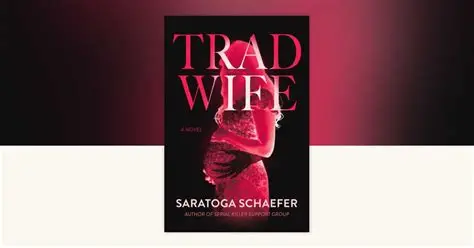
#BookReview ‘Trad Wife’ by Saratoga Schaefer
About the book …. Published by Transworld Publishers on February 19th , 2026, huge thanks to the publishers for approving my request...
Read out all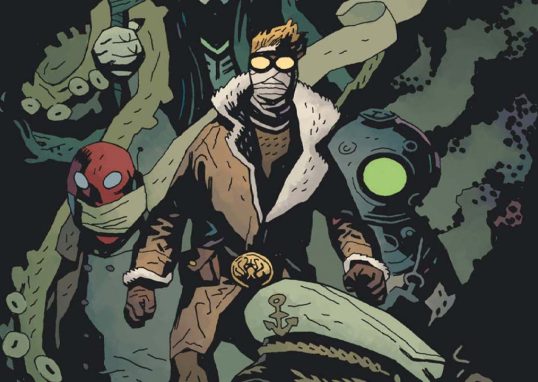
#BookReview ‘Kraken’ by Shannon Eric Denton and David Hartman
About the book… More monster than man… A unique supernatural historical adventure from the award-winning writer and artist team of Shannon Eric...
Read out all
#BookReview ‘Dying For Christmas’ by Tamar Cohen
About the book… I am missing. Held captive by a blue-eyed stranger. To mark the twelve days of Christmas, he gives me...
Read out all
#BookReview ‘The Night Watcher’ by Tariq Ashkanani
About the book… In this tense thriller from the winner of the Bloody Scotland Debut Prize, PI Callie Munro is hunting a...
Read out all
#BookReview ‘The Girl Who…’ by Andreina Cordani
About the book… The girl who… survived The girl who… inspires The girl who… has something to hide People can’t bring themselves...
Read out all
#BookReview ’25th Pan Book Of Horror Stories’ edited by Herbert Van Thal
About the book… From the dim and bottomless depths of your darkest nightmares… ‘An hour later there was a scream. An awful...
Read out all
Fab review lovely! So sorry I didn’t get to the book in time 🙄
Ah don’t worry you completely have your hands full atm and I will just re jig it and add yours in,no pressure,no worries 😀Thanks for taking the time to comment I hope you’re all ok xx
Awesome review and post, can’t wait to read the review for book 2! I really fancy picking these up now!
That’s so kind of you to say that! I am working on reading Book 2 at the moment so hopefully the post will be up this week 🙂