 About the book…
A stunning novel about a couple that pushes against traditional expectations, moving with their dogs to the Irish countryside where they embed themselves in nature and make attempts to disappear from society.
It is the winter following the summer they met. A couple, Bell and Sigh, move into a remote house in the Irish countryside with their dogs. Both solitary with misanthropic tendencies, they leave the conventional lives stretched out before them to build another—one embedded in ritual, and away from the friends and family from whom they’ve drifted.
They arrive at their new home on a clear January day and look up to appraise the view. A mountain gently and unspectacularly ascends from the Atlantic, “as if it had accumulated stature over centuries. As if, over centuries, it had steadily flattened itself upwards.” They make a promise to climb the mountain, but—over the course of the next seven years—it remains unclimbed. We move through the seasons with Bell and Sigh as they come to understand more about the small world around them, and as their interest in the wider world recedes.
Seven Steeples is a beautiful and profound meditation on the nature of love and the resilience of nature. Through Bell and Sigh, and the life they create for themselves, Sara Baume explores what it means to escape the traditional paths laid out before us—and what it means to evolve in devotion to another person, and to the landscape.
My thanks to Emily at Midas PR for inviting me to read and review one of the titles which have been longlisted for the prestigious Dylan Thomas Prize
‘Seven Steeples’ by Sara Baume was published by Tramp Press in paperback and e-book formats in January 2022.
The story of Isabel and Simon (already shortened to Sigh and Bell, onomatopoeic, monosyllabic and indicative of their characters)and the seven years, eight turns of the seasons that they spend at the foot of a mountain is poetic, lyrical and a paean to solitude.
They ‘ghost’ themselves by removing their physical selves beyond their relatively small community, to which neither feels they belong, take their two dogs, do not deliberately leave forwarding addresses and begin to make a home in January,in a home wearing the scant remnants of previous tenants.
Each part takes one of the years, and through the progress of the seasons you can see how their relationship with the world, each other and their dogs becomes this ever decreasing circle of dependency, boundaries and moves beyond any meaningful vocabulary.
This is reflected in how their names pop up less and less through the novel, where their opposite characteristics which initially complement each other, become a mass of existence where no one is sure where one starts and the other ends. They become more ‘they’ than ‘Sigh and Bell’ in the narrative, there is little spoken aloud text and any that is, is relayed third hand as though the seasons, the reader, and the mountain are unofficial voyeurs of this small cabin.
They exist in a post society, post relationship landscape where the march of time fall into sync with the seasons whilst the implements which mark the periods of time passing fall into disrepair and are never replaced.
Their incongruous meeting at the grouping of friends of friends, shows the tangential nature of people being thrown together and spinning off to create an entirely new way of life that is the complete opposite of everything they have known. It’s not a harsh separation, they move , gifted with things which family and friends no longer need, with which they furnish their home and quickly settle in with plans to grow things, repair things, talk and think and move at a speed dictated by the couple.
Supported by savings and social security benefits, they try to minimise contact with the larger world , shop as little as possible and hide when delivery people arrive. It sounds ideal , after a fashion, brave and bold to begin with-the open countryside, lack of need to rely on others, mental and physical space to become themselves, truly themselves. But as the years go on and the mountain remains unclimbed, what is the point of their existence and how is it measured?
Through the things that they don’t do-self care, cleaning, fixing, growing- contrasted with what they do do-creating a compost bin, buying seed potatoes, trying to fix fences to create boundaries-the process of time leisurely moves through the years to the point where they become the thing they hoped for. They do not climb but in one sense become the mountain. They move less and less from their home, the decay and dereliction of their home manifests within themselves a lack of drive, the eyes of the mountain -the animals and plants which brought life to an immovable object-a repeated motif through the novel, is reflected back onto them in the essence of birds, plants, animals, fish which create the landscape of Sigh and Bell’s daily life.
The unusual way in which the sentences are structured creates an ebb and flow of the story, forcing the reader to slow down, pause, and enjoy the experience through the couple’s eyes. It is generally believed that every 7 years you are essentially a different person on a cellular level, so through these seven years, both Sigh and Bell, Yoss and Pip(their dogs) are fundamentally changed whereas the mountain, which has always been there, stays the same.
I found this deeply moving and aspirational in many aspects-the clamour of society and the drains and drags on any miniscule piece of time you might proportion for yourself are absolutely exhausting. To remove yourself from there, confirm your suspicion that your involvement in the lives of others was not as pivotal as anyone would imagine, plus the freedom afforded by this retreat, are tantalising. It is something which has appealed to me ever increasingly through the years, the notion that you could get to a point beyond time, where it doesn’t really matter, where you are so off grid you are beyond the outer limits of what is recognised as meaningful, is so beautifully explored on every page.
I was immersed, entranced and could not stop reading as I had no idea where it was going and how it would end, and genuinely? The ending did not matter. It was the journey, the process, the movement through the years and the deconstruction of what is considered meaningful in terms of activity, relationships and movement through society that resonated so deeply with me.
I absolutely loved it and am so grateful for the opportunity to read Seven Steeples.
 About the author…
Sara Baume is an Irish novelist.
Her father is of English descent while her mother is of Irish descent. As her parents travelled around in a caravan, Sara Baume was born “on the road to Wigan Pier”. When she was 4, they moved to County Cork, Ireland. She studied fine art at Dun Laoghaire College of Art and Design and creative writing at Trinity College, Dublin from where she was awarded her MPhil. She has received a Literary Fellowship from the Lannan Foundation in Santa Fe, New Mexico.
Her books are published by Tramp Press in Ireland and Heinemann in Britain.
In 2015, she participated in the International Writing Program’s Fall Residency at the University of Iowa, in Iowa City, IA
Twitter @dylanthomprize @TrampPress
Author

bridgeman.lenny@gmail.com
Related posts

#CoverReveal ‘The House On Blood Street’ by Josh Hanson
HUGE thanks to Jamie-Lee at Black Crow Books for inviting me to be a part of an exciting cover reveal, for forthcoming...
Read out all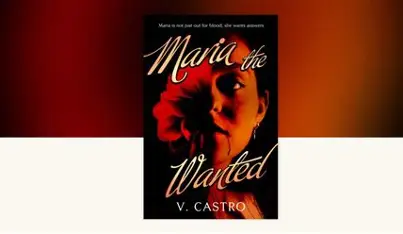
#BookReview ‘Maria The Wanted’ by V.Castro
About the book… Newly turned Mexican vampire, Maria, is not just out for blood, she wants answers. From the twice Bram Stoker-nominated...
Read out all
#BookReview ‘Strange Buildings’ by Uketsu trans by Jim Rion
About the book… From the bestselling author of ‘Strange Houses’ and ‘Strange Pictures’ comes a mesmerizing novel of eleven strange buildings and one terrible...
Read out all
#CoverReveal ‘Crone’ by Keith Rosson #HorrorHypeTeam
Guys! If you don’t know the name Keith Rosson, or how he has become one of the movers and shakers in the...
Read out all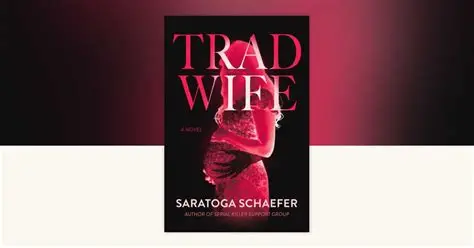
#BookReview ‘Trad Wife’ by Saratoga Schaefer
About the book …. Published by Transworld Publishers on February 19th , 2026, huge thanks to the publishers for approving my request...
Read out all
#BookReview ‘The Autumn Springs retirement Home Massacre’ by Philip Fracassi
About the book… Rose loves her peaceful life at the Autumn Springs Retirement Home. A woman in her late seventies, she enjoys...