 About the book…
Imogene is young, beautiful, kisses like a movie star, and knows everything about every film ever made. She’s also dead, the legendary ghost of the Rosebud Theater.
Arthur Roth is a lonely kid with a head full of big ideas and a gift for getting his ass kicked. It’s hard to make friends when you’re the only inflatable boy in town. Francis is unhappy, and picked on; he doesn’t have a life, hope, a chance. Francis was human once, but that’s behind him now. John Finney is in trouble. The kidnapper locked him in a basement, a place stained with the blood of half a dozen other murdered children. With him, in his subterranean cell, is an antique phone, long since disconnected…but it rings at night, anyway, with calls from the dead…
Meet these and a dozen more, in 20th Century Ghosts, irresistible, addictive fun showcasing a dazzling new talent.
This debut collection of oddities has been repackaged and re-released to maximise on the film based on a short story, ‘The Black Phone‘, so please be certain that if you have a copy of 20th Century Ghosts, this is exactly the same thing.
It has taken me a billion years to actually finish reading it, and this is the main reason why the first story, ‘Best New Horror’, is so deeply horrific and nightmare-inducing that I honestly needed to collect myself for going in further. And that is also the problem-leading with such a strong opener, the rest of the stories don’t really live up to the one that got off the blocks first.
The 15 stories, including a novella, ‘Voluntary Committal’ a; afford glimpses of the writer we now know as Joe Hill, those who came to him later may find themselves scratching their heads at the sometimes predictable plots, the thin characterisations, and odd phrasing, but this is a work in progress, starting with a solid, occasionally uneven collection.
The Black Phone and Pop Art, both are standouts for me, one dealing with child abduction and the other with a child who is inflatable. Both are singled out for attention from the wrong kind of individual whilst pining for attention from the right ones. Finney, the boy in The Black Phone, owns his narrative whilst Art, the inflatable boy, has his story told by his best friend, whose lack of a name somehow makes his storytelling more compelling and relatable whilst centering Art, whose time was always going to be inevitably short.
Finney is taken whilst his parents are busy arguing about leaving their hometown due to the kidnappings/murders by the ‘Galesburg Grabber’, distracted by a man in a van struggling with shopping, offering to help as all good boys would, and then finding himself in a hellscape of a basement. Whilst he is being kept there to die, like a bug in a jar, a broken black phone on the wall rings with a message for him and him alone… Finney is receptive to the call from the ghosts of children who have been here before him because he has lasted so long, this gives him a means of vengeance on their behalf as well as a means of escape. Whether he hallucinated this due to being starved and deprived of basic amenities is irrelevant, what matters is that he picks up the phone, and he listens.
In Pop Art, Art is a child born the way he is, a target for bullying from day one at school because he is different and life is literally fatal in so many ways-he can only use a crayon, not a pencil, he can never play musical instruments or own a pet. There is no solid explanation for this, which I love, it is what it is and how the situation is dealt with, how he forms and maintains a friendship with the first-person narrator is what spoke to me so vividly. I was absolutely melted by their deep connection in the way that teens befriend so deeply in the face of bullying from their contemporaries, or their parents trying to shape them, literally inflate them into the shape they want them to be. Art simply is.
These two tales, as well as Best New horror where an editor of the titular anthology comes undone looking for the writer behind the scariest submission you could imagine, are standouts for me. Other stories are, to my mind anyway, more derivative and have been done better by other authors. For example, ‘20th Century Ghosts‘ versus Clive Barker’s ‘Son Of Celluloid’ from the top of my head, ‘Abraham’s Boys’ versus anything that Kim Newman has written, or J.S Barnes’ ‘Dracula’s Child’. I was not a fan of this subversion of the Van Helsing character, the payoff was neat, however.
As a collection, I think it’s a good experience to read it and compare it to his later collections, perhaps, but on its own merits, I have no regrets about diving in, there are some standout scenes but it’s not one of my favorite short story collections which I have read this year.
About the author…
 Joe Hill is the #1 New York Times bestselling author of ‘Heart-Shaped Box’,‘The Fireman’ , and ‘Full Throttle’.
He won the Eisner Award for Best Writer for his long-running comic book series, ‘Locke and Key’, co-created with artist Gabriel Rodriguez.
Much of his work has been adapted for movies and television. His second novel,‘Horns’, was translated to film in 2014 and starred Daniel Radcliffe. His third novel, ‘NOS4R2’, is now a hit series on AMC, starring Zachary Quinto.
The first season of Locke & Key was released on Netflix in early 2020 and became an overnight smash.
His story, “In The Tall Grass,” co-written with Stephen King, was made into a feature for Netflix, and became a mind-bending cult horror sensation. Most recently, Hill has returned to graphic novels — his latest comics include ‘Basketful Of Heads’ and ‘Plunge’ for D.C., and ‘Dying Is Easy’ for IDW.
Links-http://www.joehillfiction.com/
Twitter @joe_hill @gollancz
Author

bridgeman.lenny@gmail.com
Related posts

#CoverReveal ‘The House On Blood Street’ by Josh Hanson
HUGE thanks to Jamie-Lee at Black Crow Books for inviting me to be a part of an exciting cover reveal, for forthcoming...
Read out all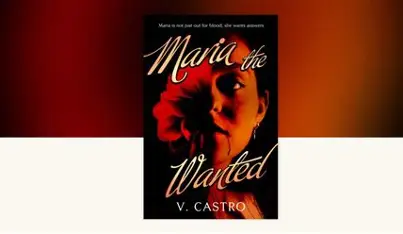
#BookReview ‘Maria The Wanted’ by V.Castro
About the book… Newly turned Mexican vampire, Maria, is not just out for blood, she wants answers. From the twice Bram Stoker-nominated...
Read out all
#CoverReveal ‘Crone’ by Keith Rosson #HorrorHypeTeam
Guys! If you don’t know the name Keith Rosson, or how he has become one of the movers and shakers in the...
Read out all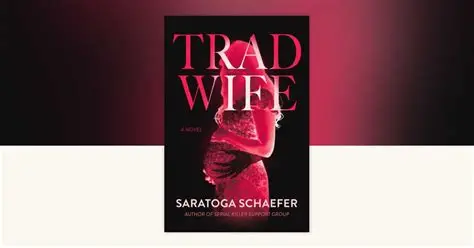
#BookReview ‘Trad Wife’ by Saratoga Schaefer
About the book …. Published by Transworld Publishers on February 19th , 2026, huge thanks to the publishers for approving my request...
Read out all
#BookReview ‘The Autumn Springs retirement Home Massacre’ by Philip Fracassi
About the book… Rose loves her peaceful life at the Autumn Springs Retirement Home. A woman in her late seventies, she enjoys...

#BookPreviewReview ! ‘The Hive’ by Ronald Malfi
About the book… An epic, Lovecraftian horror novel in the vein of Black River Orchard and American Elsewhere about a small town...
Read out all