 About the book…
A cleverly voiced psychological thriller about an unforgettable—and unsettling—friendship, with blood-chilling twists, crackling wit, and a thrumming pulse in its veins, from the nationally bestselling author of The Cabin at the End of the World and Survivor Song.
What if the coolest girl you’ve ever met decided to be your friend?
Art Barbara was so not cool. He was a seventeen-year-old high school loner in the late 1980s who listened to hair metal, had to wear a monstrous back-brace at night for his scoliosis, and started an extracurricular club for volunteer pallbearers at poorly attended funerals. But his new friend thought the Pallbearers’ Club was cool. And she brought along her Polaroid camera to take pictures of the corpses.
Okay, that part was a little weird.
So was her obsessive knowledge of a notorious bit of New England folklore that involved digging up the dead. And there were other strange things—terrifying things—that happened when she was around, usually at night. But she was his friend, so it was okay, right?
Decades later, Art tries to make sense of it all by writing The Pallbearers’ Club: A Memoir. But somehow this friend got her hands on the manuscript and, well, she has some issues with it. And now she’s making cuts.
Seamlessly blurring the lines between fiction and memory, the supernatural and the mundane, The Pallbearers’ Club is an immersive, suspenseful portrait of an unforgettable and unsettling friendship.
OMG this is the book you need to get your sweaty, graspy hands on this year if you consider yourself a horror fan of any standing (and yes, yes I do). A HUGE fan of Tremblay’s dark, bleak and beautiful novels, I was absolutely thrilled when the lovely folks at Titan approved my review request for ‘The Pallbearer’s Club’ which is out NOW
‘Will something terrible happen? When will something terrible happen? Is the worst always to come? The worst is always to come.’
Art Barbara, noted from the front piece as the author of this novel/memoir, writes in an ever increasing stream of consciousness technique, with long, looping sentences, about the decades long danse macabre between himself, and Mercy Brown.
Neither of them can be belived-or can they?-as they identify the names are pseudonyms, chosen for their relation to the punk music scene of the 1980’s and the myth/legend of the New England Vampire, also named Mercy Brown. So they identify themselves as unreliable narrators even as narrate the relative reality and circumstances of their meeting.
In order to get into college, perpetual outside and physically, mentally different Art needs something to stand out on his application form. As he would probably hate any society which would accept him as a member, so deep is his sense of self revulsion which is pitted against his innate nature to go/do/explore the wider world, he creates his own-the Pallbearer’s Club. He recruits his team by posting flyers around the town, not really optimistic about his intentions to represent the outsiders, the forgotten, the unloved and unwanted at their exit from this world.
Three people answer his adverts, and the description of their first funeral is replete with such sadness, sorrow and awkwardness that despite his warnings, you take what he says as true. The irony of these young teens bearing witness to the rejects of society in order to access the most esteemed of socially accepted halls of education is painful.
And then Mercy appears and so begins her side of the story for as you read, she annotates, interferes and comments on Art’s narration and soon you find your perceptions jostling alongside hers.
With nods to gothic literature including Dracula and The Crucible, Mercy and Art begin what appears to a folie a deux, a dance of mutual need as Art’s body begins to fight back against him, Mercy becomes increasingly more involved in the lives of Art and his parents, and the music scene of the late 80’s through to the 2000’s is lovingly detailed with a sense of realness that intimates an overlapping of Paul Tremblay’s real life.
Through the funerals that Mercy and Art attend, there is this encroaching sense of darkness as Mercy shows Art another side of life, introducing him to the punk rock scene, and the art of death through the Polaroids she takes of the dead as they lie in their coffins.
‘Hope is believing there’ll be another moment of joy,and despair is knowing there won’t be one more.’
A school project that helps Art solidify the notion that Mercy is a monster, her eagerness to help him by almost laying a trail of breadcrumbs to the truth leads to a shocking and cataclysmic separation of the two. When Art eventually moves the now defunct Pallbearer’s Club to his vision of what music should be, and sets himself up as a one man band, he remains massively missing the part of his life that had Mercy in it. And, as you read, you begin to wonder which, if either of them, is the real monster. You also become aware of your role as the reader, someone who is essentially reading a postscript to a life. The manuscript of the book which you are reading alongside Mercy represents the major periods of Art’s development from teen, to adult, and how death and nihilism have remained a mainstay of his life no matter where Mercy was.
And at the end, you have this revelation that as readers, we are all pall bearer’s of this tale, we have carried it from the opening ceremony to the last sentence. And boy what a last sentence it is. You remain rooted to the spot , unable to put it down, move on or think as flash after flash goes off in your mind about what you have just read, realising that your participation in the story which you have read makes you an active participant, For, aren’t we all taking this role, carrying this book, reporting back to others about what we enjoyed, what we didn’t, what worked and what flew over our heads?
This book is coffin shaped and glorious, it has been reviewed by quite a few readers as not having much going on, and in terms of action/gore well yes there is an argument to be made about this. But that is the point-it takes such balls to write such a huge novel over such a long period of time and to remain that restrained, that focussed on the life lived after Mercy appears to Art. His transformation, both physical and psychological is this great unravelling and is monstrous in its design and the pay off is so very worth it.
I read the e-arc and when the physical copy arrived yesterday, I was honestly amazed that it wasn’t much bigger and thicker. Because it weighs on your mind so much, and I flew at it with the intention of sitting up until it was finished, but it has so much going on, so much to think about that I had to have a side book in order to cope with the mental gymnastics I did whilst reading The Pallbearer’s Club.
It is such an outrageous and ingenious concept, I don’t believe anything like this has been done before and I love it for it’s boldness, the risks it takes and how it speaks so directly and fearlessly to the reader.
Rest assured, a little haunting will occur after finishing it. For Art and Mercy are not easily put back on the shelf.
 About the author…
Paul Tremblay has won the Bram Stoker, British Fantasy, and Massachusetts Book awards and is the author of The Pallbearers Club (coming 2022), Survivor Song, Growing Things, The Cabin at the End of the World, Disappearance at Devil’s Rock, A Head Full of Ghosts, and the crime novels The Little Sleep and No Sleep Till Wonderland.
His essays and short fiction have appeared in the New York Times, Los Angeles Times, Entertainment Weekly online, and numerous year’s-best anthologies. He has a master’s degree in mathematics and lives outside Boston with his family.
Links-http://www.paultremblay.net/
You can listen to Paul kicking off one of my favourite podcasts, Talking Scared, in the first episode here.
Twitter @paulgtremblay @TitanBooks @TalkScaredPod
Author

bridgeman.lenny@gmail.com
Related posts

#CoverReveal ‘The House On Blood Street’ by Josh Hanson
HUGE thanks to Jamie-Lee at Black Crow Books for inviting me to be a part of an exciting cover reveal, for forthcoming...
Read out all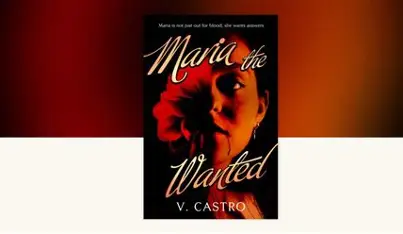
#BookReview ‘Maria The Wanted’ by V.Castro
About the book… Newly turned Mexican vampire, Maria, is not just out for blood, she wants answers. From the twice Bram Stoker-nominated...
Read out all
#CoverReveal ‘Crone’ by Keith Rosson #HorrorHypeTeam
Guys! If you don’t know the name Keith Rosson, or how he has become one of the movers and shakers in the...
Read out all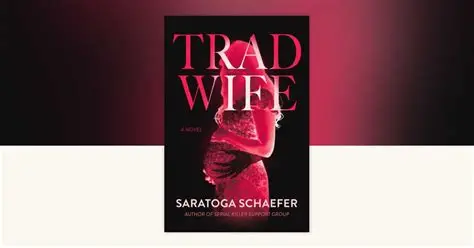
#BookReview ‘Trad Wife’ by Saratoga Schaefer
About the book …. Published by Transworld Publishers on February 19th , 2026, huge thanks to the publishers for approving my request...
Read out all
#BookReview ‘The Autumn Springs retirement Home Massacre’ by Philip Fracassi
About the book… Rose loves her peaceful life at the Autumn Springs Retirement Home. A woman in her late seventies, she enjoys...

#BookPreviewReview ! ‘The Hive’ by Ronald Malfi
About the book… An epic, Lovecraftian horror novel in the vein of Black River Orchard and American Elsewhere about a small town...
Read out all