About the book…
 A colleague’s violent death and its apparent cause – a stolen copy of an old, never-released Karloff/Lugosi film – set film editor Sandy Allan on the trail of the film’s origins and history. Mystery surrounds the movie, and as Sandy learns of the tragedies which haunted its production, she finds herself threatened by an ancient force protecting secrets deeper than the suppression of a 50-year-old movie.
Originally published in 1989, ‘Ancient Images’ has been re-released by Flame Tree Press with a glorious new cover and a glorious new audience to scare! I am very grateful to the publishers for approving my Netgalley review request , Ramsey Campbell is a fantastic writer and a stalwart of the British horror scene, in this reader’s humble opinion, so I was thrilled to have the chance to read it.
A mixture of social commentary and folk horror which does not feel dated, especially given the ‘post fact’ , social media driven world which we live in, ‘Ancient Images’ manages to finely balance the need of the reader to be challenged and scared, with underlying issues of morality and culpability, whilst avoiding the exposition that other authors use when exploring these themes.
A rumoured movie which was thought to be lost, is the fulcrum on which the book turns. Sandy Allan, has been invited by her good friend to watch the one and only known copy but instead witnesses his death, and the cans of film are missing, bar one torn scrap of film trapped under a door frame.. Inexplicable and brutal, the nature of this crushing blow spurs Sandy to try and finish what Graham started, restore the film and show it to as wide an audience as possible. She does not consider that maybe there is a reason why the film was never shown, why no one talks about it despite starring Boris Karloff and Bela Lugosi…
There is a plot running alongside the main one regarding a British bread manufacturer-Staff Of Life wheat makes the best in Britain, it has an unexpected effect for that most British tradition, the cucumber sandwich-and a group of nomad/hippies who are creating havoc by refusing to live a life as espoused by 1980’s, Thatcherite mores. How they dovetail together is not immediately obvious but as Sandy tries to track down all known survivors of the film, ‘Tower Of Fear’, and, bearing in mind that they are old super elderly, a surprising amount of death dogs her journey. As does a peculiar smell, and the sense of being followed by someone just out of the corner of her eye. The sense of menace builds and builds, and I can guarantee that you will never look at a scarecrow in the same way again.
As well as being a top notch horror novel, the open discussion of what contsititues being British, what are the morals-or lack of them-who guards these and maintains them is so interesting to me, this was a time when Thatcher was pushing the whole ‘anyone can make it if you try hard enough‘ rhetoric which amounts to throwing anyone under a bus until you get what you need. This is reflected in the discussion about journalistic responsibility to tell a story truthfully, versus selling stories for shock value. The movies produced in this country were meant to reflect this, even back in the 1930’s where the marginalisation of horror split people from the general public up to the highest levels of government as to the effects it could have on moral decay, watching horror films and the correlation with anti-British sentiment were seen as co-dependent factors in what people were, and were not , allowed to see.
As well as the above topics, the sense of ownership between film maker and their audience really made me think-with the advent of social media and the spreading of opinions, whether they are valid or not-including, obviously what I write here contributes in a way towards how people regard this book, hopefully it will get someone picking it up! What responsibility do we have before writing a review, creating a ‘buzz’, deriding those artists who work in a world we can barely comprehend? Does the experience of watching a movie belong to the viewer or the director? Is anything ‘owed’ on either side, and if so , what?
I really dug into what is and is not , individual and collective responsibility and it seems the link between artist and audience since the original publication, has , to some extent, both widened and narrowed. Widened because we have access, of a kind, to writers, artists, film makers via their public platforms and narrowed, because those people can choose to block, mute and report opinion pieces which they do not like, agree with, or find objectionable in any way.
The folkloric elements were genuinely terrifying and dark, and when intertwined with this moral unease as well as creating a feeling that you, the reader, was both enchanted and bereft at the idea of a missing Karloff/Lugosi film, really drives home why Ramsey Campbell is so well regarded and why his influence on the horror genre continues to this day.

About the author…
Ramsey Campbell is a British writer considered by a number of critics to be one of the great masters of horror fiction. T. E. D. Klein has written that “Campbell reigns supreme in the field today,” while S. T. Joshi has said that “future generations will regard him as the leading horror writer of our generation, every bit the equal of Lovecraft or Blackwood.”
Links-http://www.ramseycampbell.com/
Twitter @ramseycampbell1 @flametreepress
Author

bridgeman.lenny@gmail.com
Related posts

#BlogTour ‘Bitter Sweet’ by Hattie Williams
About the book… ‘In my life, there are things that have happened to me, and things that I have done, that have...

#BookReview ‘One Dark Summer’ by Saskia Sarginson
About the book… The BRAND NEW psychological thriller from Richard and Judy bestselling author of The Twins, Saskia Sarginson It was the...
Read out all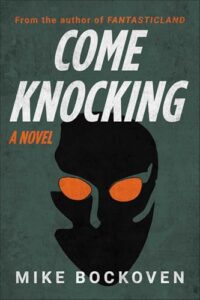
#BookReview ‘Come Knocking’ by Mike Bockoven
About the book… In a groundbreaking theatrical experience gone horribly wrong, a deadly night reveals the dark consequences of blurring the lines...
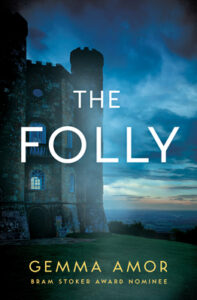
#BookReview ‘The Folly’ by Gemma Amor
About the book… From Bram Stoker and British Fantasy Award-nominated author Gemma Amor comes an atmospheric gothic mystery that will haunt you...
Read out all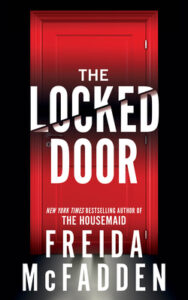
#BookReview ‘The Locked Door’ by Freida McFadden
About the book… Some doors are locked for a reason… While eleven-year-old Nora Davis was up in her bedroom doing homework, she...
Read out all#CoverReveal ‘Coffin Moon’ by Keith Rosson
Another day, another FABULOUS book reveal (hopefully on the right day at the right time, she says, fingers crossed she is living...
Read out all