About the book…
 A tale of revenge, cultural identity, and the cost of breaking from tradition in this latest novel from the Jordan Peele of horror literature, Stephen Graham Jones.
Seamlessly blending classic horror and a dramatic narrative with sharp social commentary, ‘The Only Good Indians’ follows four American Indian men after a disturbing event from their youth puts them in a desperate struggle for their lives. Tracked by an entity bent on revenge, these childhood friends are helpless as the culture and traditions they left behind catch up to them in a violent, vengeful way.
A huge fan of his other work, I was thrilled to see that my favourite publishers were bringing out one of horror’s most anticipated novels in 2020.
I would have read it then but honestly, the world went to hell and is struggling to find it’s way back so it kind of was put to one side until the time came when I could throw myself into the pages, full throttle, and give it 100% undivided attention.
And now , that moment has arrived. Courtesy of Audible who have the audiobook here as a part of their Plus library, and the paperback from Titan Books, this book swallowed me whole.
I confess to having read quite a few reviews of this novel, after I finished, to see if there was a commonality in what I think I read, and what others experienced. That is not to say I am right, anyone else is wrong, but this story moved me on such a personal level, that I wanted to reach out and see what others had thought.
The biggest issue I came across in low ranking feedback, is that readers were waiting for a reveal, a twist and were pissed when they didn’t find one. I would not start a novel with any other exhortation to the writer than ‘Show Me..’ and with writing of this quality, I was not looking for anything other than to be subsumed in the narrative, to smell it, soak in it and be so very, very moved. And then , after reading the paperback, I listened to the superbly read audiobook, performed by Shaun Taylor-Corbett
My god, what an absolute treat it was to shut the world out and listen to the same story, told in an entirely different way.
It is often said that reviews are written for the reader, not the author, and in this case I cannot recommend this book enough. At some point, whilst my hands were busy, I had to put it on speaker and my working from home other half wandered in and stopped talking nineteen miles to the dozen.
This never happens. He shut up and listened, he was pulled in at a very critical point of the story, when main narrator, Lewis, explains to his co-worker and fellow Native American (apologies if this is not the correct word usage, please hold me accountable if that is wrong) why he feels he is haunted by the death of an elk which he and his 3 fellow Blackfeet killed 10 years earlier.
I am aware of the power of writers to reach in to your chest, grab your heart and wring it for every real and false emotion before putting it back, bleached white and stilled into that chest cavity, and then thumping it to get it diffused and pumping again. But seeing it in action, seeing the effect on someone else was absolute magic.
This story subverts every known trope about the whole ‘men go off into the woods and come back changed’ narrative in every possible way. These 4 men, all of whom have grown up together, live on a reservation with very strict rules about hunting. In defiance of the ranger who believes no one can get a thing past him, they drive out with the intent of catching an elk , and , in the proper and correct manner, thank the animal for its sacrifice whilst using every part of it to honour its existence.
Things go horribly wrong and, on the tenth anniversary of the Thanksgiving Special, Lewis becomes convinced that he is being haunted. He is married to Peta, a white girl whose unease at him talking to a female Native American co-worker is exemplified in the way that he confesses to her, Shaney, about the elk hunt, and it feels a more intimate cheating than sleeping with her. And it is because she is Indian, she has an understanding that Peta can never, truly have. That sense of infidelity and betrayal is so keenly felt it is painful yet entirely understandable.
The examination of the way that these men have spent the 10 years since the hunt, eking out an existence where they try not to make a ripple, aware of a world which does not understand them, nor wants to. They are haunted by the burden of living as Blackfeet in a world which has forgotten them, forgotten their ways and only uses them as a yardstick to measure success by. Either that or misplaced colonial guilt has them trying to push them together-it is no coincidence that as the only native Americans, Shaney and Lewis are put to work together. It is seen and heard in the way that Lewis reverts to his old ways when he talks on his phone to the others-Ricky, Gabriel and Cassiday.
Lewis believes he is the first to be targeted by the ghost of the elk as he has left the res and is living with Peta. It resonates with a whole ‘know your place’ rhetoric as no one really wants to talk about the elephant, or rather, the elk in the room. It is the expectation of these men to ignore the racism that dogs their everyday life, and is exemplified in so very many daily acts of aggression. the policemen who turn up to ask Leis about his dog biting another man, the co-workers who bundle the ‘others’ together, the way Ricky at the book’s opening makes himself small and tries to avoid trouble at a local bar.
These and many other tiny and not so tiny , acts build throughout the book as you pull apart the narrative to find the bare bones of the characters-having started with a death, then moved to Lewis’ narration, before returning to the reservation for Gabe and Cassady, you are systematically skinning and dismantling every part of what the author is trying to do. And , if you are like me, white, Western Welsh woman with an inherent sense of equality but no real understanding of native culture beyond my own paltry research into it, you are going to do a terrible job, no matter what your intentions are.
And that, my friends is the crux. Stephen Graham-Jones takes the continuing abuse and abandonment of indigenous people, holds a mirror up to the readers and exposes drug abuse, lack of life choices , societal degradation, poor housing and lack of respect for the culture from where the myth of an Elk Head Woman originated. Those who hunt , and kill, as part of their tradition , when they try they are unable to do it as they should.
Their actions at the Thanksgiving Special haunt them because they did not do what they were supposed to.
Their sublimation into the social culture is at the expense of their mental health ,their physical health and their ancestors. They have nothing to fight back against it with, other than being that good indian, who does not fight back, stand up for their heritage and is prepared to die for someone else’s more consumable concept of what they should be.
We have a saying in Wales, a word named ‘hiraeth‘ , a search for a place of belonging, for a feeling that is home. I may have mentioned it before, as the way it makes you feel, deep in your heart is , essentially, beyond transference to another language. And I believe, reading this novel, that is what those 4 men went out searching for, and their quest does not go as planned. What happens to them? Well I would recommend reading ‘The Only Good Indians’ and finding out for yourself.
About the author…
 Stephen Graham Jones is the author of fifteen novels and six collections. He really likes werewolves and slashers.
Favorite novels change daily, but ‘Valis’ and ‘Love Medicine’ and ‘Lonesome Dove’ and ‘It’ and ‘The Things They Carried’ are all usually up there somewhere.
Stephen lives in Boulder, Colorado. It’s a big change from the West Texas he grew up in. He’s married with a couple kids, and probably one too many trucks.
Links-http://www.stephengrahamjones.com/
Twitter @SGJ72
1 comment
Leave a Reply
Author

bridgeman.lenny@gmail.com
Related posts
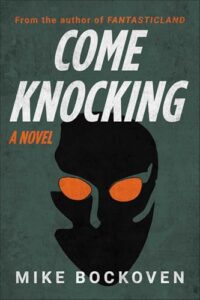
#BookReview ‘Come Knocking’ by Mike Bockoven
About the book… In a groundbreaking theatrical experience gone horribly wrong, a deadly night reveals the dark consequences of blurring the lines...
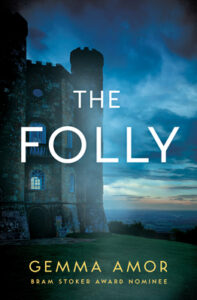
#BookReview ‘The Folly’ by Gemma Amor
About the book… From Bram Stoker and British Fantasy Award-nominated author Gemma Amor comes an atmospheric gothic mystery that will haunt you...
Read out all#CoverReveal ‘Coffin Moon’ by Keith Rosson
Another day, another FABULOUS book reveal (hopefully on the right day at the right time, she says, fingers crossed she is living...
Read out all#BookReview ‘At Dark I Become Loathsome’ by Eric LaRocca
About the book… From the Bram Stoker Award-finalist and Splatterpunk Award-winner of Things Have Gotten Worse Since Last We Spoke,( review and purchase...
Read out all#CoverReveal ‘The Fever House Duology’ By Keith Rosson
Oh my goodness I am genuinely so excited to be able to shout loudly about Black Crow PR’s forthcoming publishing horror signing,...
#BookReview ‘Listen To Your Sister’ by Neena Viel
About the book… A razor-sharp, breathlessly harrowing novel of siblings, the nightmares that haunt us, and the deep, powerful love that can...
Actual goosebumps, what a review!