About the book…
 It’s 2019 in Sudleigh, a market town not far from the south coast. It’s not a bad place to live, provided the new housing development doesn’t ruin it, but most residents are too caught up in their own disappointments, grudges, and sores to notice.
Former lounge musician Frank wants to pass his carpet business to his nephew Joe, killing the boy’s dream to become a chef. Sharp-elbowed phone-sex operator Heather will stop at nothing to become the manager of the golf club.
Gap-year Tom is cleaning toilets but finding unexpected solace in his Chinese house-share. Miss Bennett keeps putting her house on the market when she doesn’t want to move. Do they all know how their lives are linked?
Meticulously observed, We Need to Talk offers a jigsaw puzzle of unwitting connections for the reader to assemble. The finished picture is a hyper-real, unflinchingly honest portrait of multi-jobbing, gig-economy Middle England on the eve of Covid, confirming some preconceptions while gently upsetting others
My thanks to Emma at Damp Pebbles for the blog tour invite, and Eye Books for the gifted e-arc of ‘We Need To Talk’ which is published in July 2021!
The irony inherent in this novel, is exemplified by the title,’we need to talk…‘ but who, if anyone is listening?
The vignettes through which the town of Sudleigh is observed are of the type one might come across in the works of Alan Ayckbourn, fragments of a life wryly observed and then layered like an Victoria Sponge, each bite of the narrative offering a taste of life as observed by its inhabitants.
Knowing what comes after, having a village on the precipice of the pandemic, gives the novel a sense of anticipation, none of the worries and concerns which bother Frank, Josh, Sheila, Sean , Tony and Lydia will necessarily have disappeared, but they will be thrown in stark relief by the events of ‘tomorrow’.
The concerns which are dividing Martin (asked to be the committee lead for the ‘Fight For Sudleigh’ drive) and wife, Bridget ( proposing a 90 house development for social housing) bookends the story with Lydia and Tom, also on opposing sides. Some words are, once spoken, irretrievable and some are not heard at all. As this snapshot of a small British enclave , pre-Covid, moves through various residents and social demographics, it is a quintessentially white, English experience which is being explored in a way that feels as though looking down the lenses of binoculars at a very particular cross section of people.
On the surface it appears that their lives are pretty cosy and settled, but the conversations are fragments of missed opportunity, loss, grief and infidelity, questions unasked, and answers forever hidden.
This is a quick read which I found reflective, earnest and often funny, the way that the dialogue is presented, in a book called ‘We Need To Talk’, is pretty important , and I feel that Jonathan Crane has created enough verbal badinage to counterbalance the heaviness of where, in time, Sudleigh is.
It feels brief, necessarily so, and very modern ,and I enjoyed reading it!
About the author…
 Jonathan Crane completed an MA Literature and a PhD in Creative Writing at the University of Essex, where he is now an academic in Creative Writing. He also works with charities to design and deliver writing programmes in prison and community settings.
His previous writing includes fiction and academic papers. Formerly a musician/composer, he has released two albums. We Need to Talk is his first novel.
He currently lives in Hampshire.
Twitter @jon_crane24 @EyeAndLightning @damppebbles
2 comments
Leave a Reply
Author

bridgeman.lenny@gmail.com
Related posts

#BlogTour ‘Bitter Sweet’ by Hattie Williams
About the book… ‘In my life, there are things that have happened to me, and things that I have done, that have...
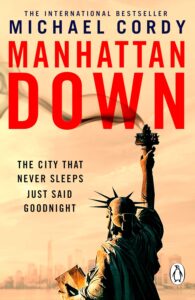
#BookReview ‘Mahattan Down’ by Michael Cordy
About the book… A propulsive rollercoaster high concept international thriller which dares to take the world to the edge of oblivion. THE...
Read out all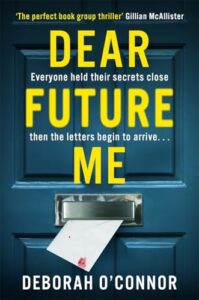
#BlogTour ‘Dear Future Me’ by Deborah O’Connor
About the book… In 2003 Mr. Danler’s high school class got an assignment to write letters to their future selves. Twenty...
Read out all
#BlogTour ‘The Strange Case Of Jane O’ by Karen Thompson Walker
About the book… In this spellbinding novel, a young mother is struck by a mysterious psychological affliction that illuminates the eerie dimensions...
Read out all#BlogTour ‘The Grapevine’ by Kate Kemp
About the book… It’s the height of summer in Australia, 1979, and on a quiet suburban cul-de-sac a housewife is scrubbing the...
Read out all#BlogTour ‘The Swell’ by Kat Gordon
About the book… In places of darkness, women will rise . . . Iceland, 1910. In the middle of a severe storm...
Read out all
Thanks for being part of the blog tour 🙂
Thanks so much for having me Emma 😃