About the book…
 THE MOVIE STAR AND THE MOVIE CRITIC — HOW FAR WOULD THEY GO TO KEEP THEIR SECRETS BURIED? DOUBLE FEATURE Contains two CLASSIC Donald E. Westlake novellas, A Travesty and Ordo.
WHAT’S HIDDEN BEHIND THE SILVER SCREEN?
In New York City, a movie critic has just murdered his girlfriend – well, one of his girlfriends (not to be confused with his wife). Will the unlikely crime-solving partnership he forms with the investigating police detective keep him from the film noir ending he deserves?
On the opposite coast, movie star Dawn Devayne – the hottest It Girl in Hollywood – gets a visit from a Navy sailor who says he knew her when she was just ordinary Estelle Anlic of San Diego. Now she’s a big star who’s put her past behind her. But secrets have a way of not staying buried…
These two short novels, one hilarious and one heartbreaking, are two of the best works Westlake ever wrote. And fittingly, both became movies – one starring Jack Ryan’s Marie Josée Croze, and one starring Fargo’s William H. Macy and Desperate Housewives’ Felicity Huffman.
“A book by this guy is cause for happiness” – Stephen King
‘Double Feature’ is back in print for the first time in 40 years this February, available in paperback, and ebook formats. Containing the novellas ‘A Travesty’ and ‘Ordo’, these were first published in 1977.
This is particularly reflected in ‘A Travesty’ where the use of epithets and racial stereotyping which made this reader uncomfortable. It’s unsure whether they were used for effect (not suggesting that they were, or are, ever acceptable, but illustrating the character)or were reflective of Donald E Westlake’s personal beliefs. A scene of police violence towards a female criminal had me wincing, and again, I am unsure of the context but read it as an example of systemic violence against ‘the other’ (in this case a radical revolutionary) by the police.
‘A Travesty’ tells the story of a movie critic, soon to be divorced, who is either such a bad guy that his family has taken against him and sided with his ex-wife, or his family are just not nice either. The only perspective the reader has is his, and as he starts the novella having killed one of his girlfriends-he has two and is a serial philanderer-but justified it as an accident.
Instead of admitting to this accident, his sense of vanity and self-importance is such that he uses plots and themes of movies to try and avoid capture, including throwing the scent of the trail onto other individuals in Laura’s life. The detective investigating Laura’s death is enamoured with Carey’s celebrity, and asks him to help him with several cases he is working on.
This is both bizarre and hilarious, as both the reader and Carey are aware of the extremely thin ice that he is treading on. He plays games of ‘guess whodunnit’ with the lives of others whilst miring himself absolutely, and completely in the death of his girlfriend. As a slice of nostalgic crime fiction, this is brilliantly plotted and immaculately paced. Each chapter has you on edge, waiting for Carey to be found out- he is such an objectionable person, from the way that he is so nonchalant about murder, the way he takes what he wants and justifies his actions.
And yet, he is so charming and is presented by Westlake as a reasonable man, it really shakes your moral compass to find yourself siding with a murderer! Darkly funny, with a meta-theme running through it as he holds a screening event for the movie, ‘Gaslight’, which becomes a running joke as well as setting the scene for deeply unnerving denouement, ‘A Travesty’ is about a man getting what he deserves.
‘Ordo’, on the other hand, is a slighter offering but non the less effective for its size. The tale of a sailor who married a young girl, subsequently snatched back by her mother under claims that she had no idea what she was doing, is bittersweet and haunting.A magazine article on new Hollywood ‘sex sensation’ Dawn Devayne,has a picture of Dawn with her first husband, a simple sailor named Ordo.
As Ordo, totally immersed in his Navy lifestyle, in a relationship with an understanding that it is heading towards marriage, is mercilessly ribbed and finds his life affected by this revelation that 16 year old Estelle was turned into movie star Dawn under the influence of her domineering mother, he decides to track her down.
In his attempt to establish whether Dawn is still the Estelle that he married, or ever was, he and Dawn/Estelle embark on a voyage of self dicsovery in a land that prides itself on how well it sells a lifestyle based on fakery and flim-flam.
Deeply poignant and so sad, this story has elements that made me think of Marilyn Monroe, and other women, who were set up by the studio system and turned into stars, moulded, manipulated and made to feel obliged to the studio heads for the remodelling of their lives.
I had no idea where either story was going, each was deeply satisfying for their own reasons -being careful to avoid spoilers here!-and as vintage stories cum character studies, they hold up after all this time as fine examples of writing. it’s another superb entry into the Hard Case crimes canon and another reminder of why Donald E Westlake was just so very good at what he did, on both the page and the screen. This is why ‘Double Feature’ is so successful, the two tales balance each other so very well, and remind you how great he was as a screenwriter too.
About the author…

Donald E. Westlake (1933-2008) was one of the most prolific and talented authors of American crime fiction. He began his career in the late 1950’s, churning out novels for pulp houses—often writing as many as four novels a year under various pseudonyms such as Richard Stark—but soon began publishing under his own name. His most well-known characters were John Dortmunder, an unlucky thief, and a ruthless criminal named Parker. His writing earned him three Edgar Awards: the 1968 Best Novel award for God Save the Mark; the 1990 Best Short Story award for “Too Many Crooks”; and the 1991 Best Motion Picture Screenplay award for The Grifters. In addition, Westlake also earned a Grand Master Award from the Mystery Writers of America in 1993.
Westlake’s cinematic prose and brisk dialogue made his novels attractive to Hollywood, and several motion pictures were made from his books, with stars such as Lee Marvin and Mel Gibson. Westlake wrote several screenplays himself, receiving an Academy Award nomination for his adaptation of The Grifters, Jim Thompson’s noir classic.
Author

bridgeman.lenny@gmail.com
Related posts

#BlogTour ‘Bitter Sweet’ by Hattie Williams
About the book… ‘In my life, there are things that have happened to me, and things that I have done, that have...
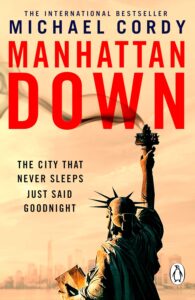
#BookReview ‘Mahattan Down’ by Michael Cordy
About the book… A propulsive rollercoaster high concept international thriller which dares to take the world to the edge of oblivion. THE...
Read out all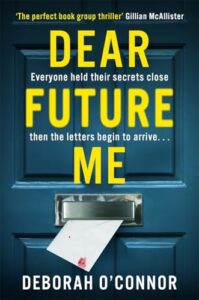
#BlogTour ‘Dear Future Me’ by Deborah O’Connor
About the book… In 2003 Mr. Danler’s high school class got an assignment to write letters to their future selves. Twenty...
Read out all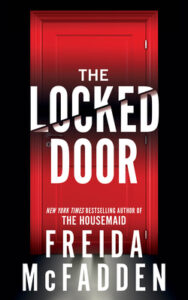
#BookReview ‘The Locked Door’ by Freida McFadden
About the book… Some doors are locked for a reason… While eleven-year-old Nora Davis was up in her bedroom doing homework, she...
Read out all#BookReview ‘Listen To Your Sister’ by Neena Viel
About the book… A razor-sharp, breathlessly harrowing novel of siblings, the nightmares that haunt us, and the deep, powerful love that can...
#BookReview ‘Wake Up And Open Your Eyes’ by Clay McLeod Chapman
About the book… The Americans meets The Exorcist as a suburban family are radicalised by a demonic force, seeping through social media and twenty-four hour...
Read out all